Currently Empty: $0.00
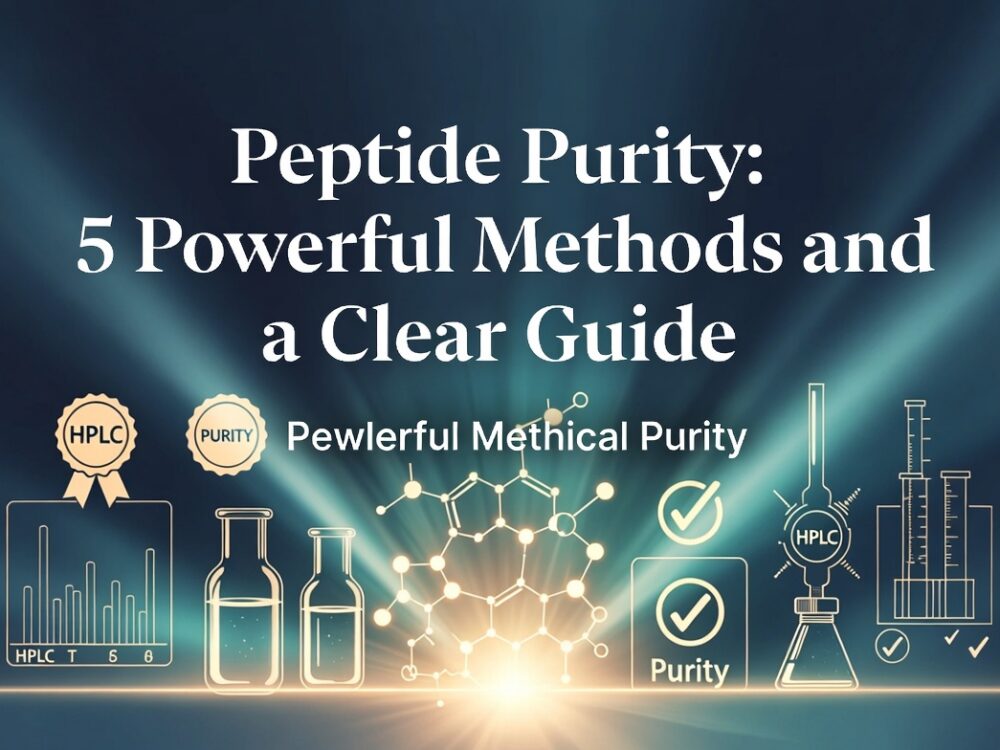
Peptides are used in research, diagnostics, and drug development, so knowing exactly what is in a sample matters. Peptide purity is evaluated to determine how much of the product is the intended sequence versus impurities, byproducts, or degradation products. A higher purity level usually means more reliable results, better reproducibility, and fewer surprises in downstream applications.
In practical terms, peptide purity helps researchers answer a simple question: can this material be trusted for the job at hand? The answer depends on the analytical method, the sample handling history, and the tolerance of the experiment itself. That is why the same peptide may be acceptable in one workflow and unsuitable in another.
Understanding how purity is measured can help you interpret certificates of analysis, compare suppliers, and choose the right peptide for your project. If you want a quick example of product-level documentation, you can review the details on Pinealon as a reference point for how research peptides are presented.
Table of Contents
- Why Peptide Purity Matters
- What “Purity” Actually Means
- The Main Method: Reverse-Phase HPLC
- Confirming Identity with Mass Spectrometry
- Additional Factors That Affect Purity Results
- Common Purity Grades
- What to Look for in a Certificate of Analysis
- How to Interpret Results for Your Application
- Peptide Storage and Handling Best Practices
- Practical Examples of Purity Decision-Making
- Quality Control Beyond a Single Number
- Common Mistakes When Reading CoAs
- Final Thoughts
Why Peptide Purity Matters
Even small amounts of contamination can affect performance. Impurities may come from incomplete synthesis, side reactions, improper cleavage, oxidation, or degradation during storage. When a peptide is evaluated for purity, the result is more than a label; it is a practical indicator of how much experimental noise may enter the system.
Peptide Purity is especially important when peptides are used for:
- Cell culture experiments
- Antibody production
- Structure-function studies
- Assay development
- Therapeutic research
In many cases, the purity requirement depends on the application. A peptide for an early screening experiment may not need the same specification as one used in a highly sensitive assay. For example, a broad exploratory workflow can often tolerate more analytical uncertainty than a final validation study.
That is why purity data should always be read in context. A peptide that is perfectly adequate for one workflow may be too variable for another. Researchers often balance purity, cost, turnaround time, and the tolerance of their assay system. In that sense, peptide purity is a decision-making tool, not just a technical number.
Purity also matters because it affects confidence. If results are inconsistent, the first question many labs ask is whether the material itself contributed to the problem. A well-documented sample reduces that uncertainty and makes troubleshooting more straightforward.
What “Purity” Actually Means
Peptide Purity refers to the proportion of the target peptide relative to all detectable related substances. It does not necessarily mean the peptide is chemically perfect or completely free of anything else. Instead, it is usually a measurement of how much of the sample appears as the desired product under a specific analytical method.
This is an important distinction because purity results depend on the test used. A peptide may appear 95% pure by one method and slightly different by another due to how the impurities behave during analysis. The reported value is therefore tied to the method, the instrument, and the conditions used during testing.
In practical terms, a purity number is a snapshot of the sample under defined conditions. It is not a universal truth about the molecule itself. Different instruments, solvents, columns, and method settings can shift the apparent result a little, which is why supporting data matters. For that reason, peptide purity should be read with the chromatogram, retention time, and identity confirmation rather than viewed in isolation.
It also helps to separate purity from identity. A sample can be mostly one compound and still be the wrong compound if the synthesis produced the wrong sequence. Likewise, a correctly sequenced peptide can still contain enough byproducts to affect performance. That is why both questions must be answered.
The Main Method: Reverse-Phase HPLC
The most common way peptide purity is evaluated is reverse-phase high-performance liquid chromatography, or RP-HPLC. This method separates compounds based on how they interact with a stationary phase and a mobile phase, usually using a water-acetonitrile gradient.
How HPLC works
- The peptide sample is injected into the HPLC system.
- Components move through a column at different speeds.
- Each compound produces a peak on the chromatogram.
- The area under the main peak is compared with the total area of all detectable peaks.
The result is often reported as a percentage, such as 90%, 95%, or 98% purity. In many reports, the major peak represents the desired peptide, while smaller peaks may indicate truncated sequences, deletions, oxidized products, or residual synthesis materials.
Why HPLC is so widely used
RP-HPLC is popular because it is:
- Sensitive
- Reproducible
- Good at separating related impurities
- Useful for routine quality control
However, HPLC purity is not the same as absolute chemical identity. A large peak may represent the correct peptide, but confirmation is still needed to prove the sequence is right. In a complete quality workflow, peptide purity is usually paired with an identity check so the report tells a fuller story.
It is also worth noting that HPLC methods vary. A laboratory may use different column chemistry, gradient speed, temperatures, or detector settings. Those choices can make a small but meaningful difference in the reported number, especially for peptides that have closely related impurities.
For readers who want a deeper technical reference on chromatography, the U.S. Food and Drug Administration provides useful background on analytical method principles at FDA guidance on analytical procedures and method validation.
Confirming Identity with Mass Spectrometry
While HPLC shows how pure a sample appears, mass spectrometry confirms whether the molecule has the expected molecular weight. This step helps verify that the major peak is actually the intended peptide. In other words, HPLC helps answer how clean the sample looks, while mass spectrometry helps answer what the sample is.
Common mass spectrometry methods include:
- MALDI-TOF
- ESI-MS
- LC-MS
Mass spectrometry can also reveal certain impurities, such as deletion sequences, truncations, or oxidation products. In many labs, both HPLC and mass spectrometry are used together to provide a more complete picture. That combination is useful because purity and identity answer different questions. A trustworthy certificate of analysis should ideally address both.
Mass spectrometry is especially helpful when a chromatogram looks clean but the team still wants additional confirmation. This can happen with peptides that produce closely spaced peaks, or with samples that have one dominant component and several low-level byproducts.
The most useful reports often include the expected mass, the observed mass, and an explanation of whether the signal matches the intended sequence. When that information is present, peptide purity becomes easier to interpret because the analytical evidence supports the purity claim.
Additional Factors That Affect Purity Results
Several factors can influence the final purity reading.
Peptide length and complexity
Longer peptides are generally harder to synthesize and purify. They are more likely to contain closely related byproducts, which can make evaluation more complicated. A short linear sequence may resolve cleanly, while a longer or more hydrophobic sequence may create broader peaks or overlapping impurities.
Sequence sensitivity
Some amino acid sequences are prone to oxidation, deamidation, or aggregation. Cysteine, methionine, tryptophan, and asparagine-containing peptides are often more challenging. Sequence chemistry can therefore affect not only the synthesis outcome but also how stable the material remains after shipment or storage.
Sample handling
Storage conditions can affect measured purity. Heat, moisture, repeated freeze-thaw cycles, and exposure to air or light may cause degradation over time. Even a peptide that left the supplier with a strong purity profile can drift over time if it is exposed to poor handling conditions.
Solvent and method conditions
Different HPLC columns, gradients, or solvents can change how peaks separate. That is one reason results may vary slightly from one lab to another. Sample concentration can also affect what the chromatogram shows. Overloaded injections may broaden peaks or hide smaller impurities, while very dilute samples may make minor components harder to see. Method details matter because they influence how the data are interpreted.
Other practical details matter too. Salt form, counterion content, and the way the peptide was dried can all influence how a sample behaves during analysis. Those variables do not automatically change the identity of the peptide, but they can alter the appearance of the chromatogram.
When results are being compared across vendors or across lots, it helps to compare like with like. A figure from one method is not always directly interchangeable with a figure from another method, even if the final percentage looks similar.
Common Purity Grades
Peptides are often sold with a stated purity range. These grades are useful as a general guide, though they should always be interpreted alongside the analytical data.
Typical grades include:
- >70%: Suitable for some screening or preliminary studies
- >80–85%: Common for many research applications
- >95%: Preferred for sensitive experiments and higher-confidence work
- >98%: Often used when very high purity is required
The right grade depends on the experiment, budget, and tolerance for impurities. A lower-grade material may be acceptable for an early-stage assay, while a more demanding workflow may justify the cost of a higher specification.
It is also worth noting that a higher number is not automatically better for every project. In some early-stage or exploratory settings, a mid-range purity peptide may be sufficient if the assay is robust and the purpose is to evaluate a trend rather than generate final data. In those cases, peptide purity still matters, but the threshold for acceptability may be lower.
When the difference between two grades is small, the decision often comes down to risk tolerance. If one impurity could alter the result, choose the better-documented option. If the experiment is tolerant to background noise, a moderate grade may be enough.
What to Look for in a Certificate of Analysis
A good certificate of analysis should provide more than a single percentage. Look for:
- The HPLC chromatogram
- The analytical method used
- The retention time of the target peptide
- Mass spectrometry confirmation
- The date of testing
- Storage conditions or recommendations
If only a purity number is listed without supporting data, it is harder to judge the reliability of the result. A strong CoA helps readers verify that the reported peptide purity came from a real method and not just a summary claim.
Some researchers also compare certificates across suppliers to see whether reporting is consistent. A clear CoA makes it easier to identify whether two peptide lots were analyzed with the same approach or whether a difference in the method might explain a difference in the reported value. That comparison is especially useful when small variations may influence reproducibility.
It can also help to look for notes about sequence modifications, salt form, and any special preparation steps. These details make the report easier to interpret and reduce the risk of misunderstandings when a sample is added to the workflow.
For a product example with broader catalog context, PEG-MGF shows how research peptide information can be organized for review alongside documentation details.
How to Interpret Results for Your Application
Choosing the right peptide starts with the use case. A screening assay, a binding study, and a longer-term stability experiment may not need the same level of purity. Instead of focusing on the biggest number alone, it helps to ask what level of impurities your workflow can tolerate.
If your experiment is sensitive to side products, oxidation, or sequence variants, a higher grade and stronger analytical support are usually worth the added cost. If the peptide is being used in a broad exploratory workflow, a lower grade may be acceptable as long as the data remain interpretable.
Researchers often benefit from comparing purity alongside other quality indicators, such as synthesis method, solubility behavior, and expected storage stability. That broader view is more useful than treating purity as the only measure of quality. In many projects, the right answer is not the highest available number; it is the most appropriate material for the planned use.
As an example, a peptide used in a short pilot study may only need to support a directional result. By contrast, a peptide used in a sensitive assay, especially one that will be repeated many times, may require stronger documentation and a higher degree of analytical confidence.
When you are unsure, consider how difficult it would be to troubleshoot a bad result later. If a low-quality material would create extra work or cast doubt on the experiment, choosing a cleaner sample is usually the wiser option.
Peptide Storage and Handling Best Practices
Even a high-quality sample can deteriorate if handled poorly. Good storage and handling practices help preserve the analytical profile that was reported on the certificate of analysis.
- Keep peptides sealed when not in use.
- Store them according to supplier guidance.
- Avoid repeated freeze-thaw cycles when possible.
- Minimize exposure to moisture and light.
- Use clean, dry tools when aliquoting or weighing material.
Proper handling is especially important for sequences that are known to oxidize or hydrolyze more easily. If a peptide is prone to change over time, the purity on day one may not match the purity after long storage under suboptimal conditions.
Storage recommendations also depend on the format. Lyophilized peptides generally tolerate storage better than solutions, and aliquoted material is usually easier to protect from repeated exposure. Once a peptide is dissolved, the clock can start moving faster because the environment is more favorable to degradation.
To preserve peptide purity after purchase, many labs keep the vial cold, dry, and protected from light until they are ready to prepare working stock. The fewer unnecessary temperature changes and exposure events, the more likely the sample is to stay close to its tested profile.
Practical Examples of Purity Decision-Making
Imagine two research scenarios. In the first, a lab is doing a basic screening experiment to identify whether a pathway responds to a new sequence. In that situation, a peptide with moderate purity may be sufficient because the goal is a directional result.
In the second scenario, the same lab is setting up a sensitive bioassay where even minor off-target components could affect readout consistency. Here, a higher purity peptide with clear HPLC and mass spectrometry support is the better choice.
A third example would be a structure-function study where researchers are comparing activity across several closely related peptides. In that case, subtle differences in purity or degradation products could distort the comparison, so analytical confidence becomes especially important.
These examples show why the reported number is only part of the story. The best choice depends on how much analytical certainty the work requires. In every case, peptide purity should be interpreted alongside the assay design, the expected stability, and the consequence of error.
One useful habit is to define the minimum acceptable quality before ordering. That way, the decision is based on the experiment rather than on a number chosen after the fact.
Quality Control Beyond a Single Number
Purity is one important quality measure, but it should not be the only one. Sequence confirmation, proper labeling, analytical transparency, and storage conditions all contribute to whether a peptide is suitable for use.
Other useful quality signals can include batch consistency, clear lot numbers, and a traceable analytical method. When those details are available, the buyer can make a more informed judgment about the overall reliability of the material.
For some buyers, reviewing a supplier’s broader product line can also help establish expectations for documentation and quality presentation. If you are comparing formulations and catalog details, pages such as PEG-MGF can be helpful for understanding how product information is organized.
When purity evaluation is combined with reliable sourcing and careful handling, researchers can reduce the risk of avoidable variability. That is especially valuable in projects where reproducibility matters and small differences in sample quality can affect the outcome. In that setting, peptide purity becomes part of a larger quality-control picture rather than a stand-alone metric.
It is also helpful to remember that documentation quality can be a clue to manufacturing discipline. A supplier that provides clear analytical details is often easier to work with because the information is easier to compare across lots and projects.
Common Mistakes When Reading CoAs
One common mistake is treating the percentage as if it proves everything. A high number is useful, but it does not tell you whether the peptide sequence is correct, whether the material was stored properly, or whether the test method was robust.
Another mistake is comparing two purity values without checking whether the methods were the same. Different columns, gradients, and detection settings can produce different results, even when the underlying sample quality is similar.
A third mistake is overlooking the date of analysis. A fresh CoA is more informative than an old report if the sample may have aged or been resynthesized. The age of the document matters because peptide purity can change after repeated handling, especially for sensitive sequences.
Researchers also sometimes forget to check whether the chromatogram is consistent with the stated percentage. If the main peak looks suspiciously small or the minor peaks are not explained, the report deserves a closer look.
Finally, do not ignore storage guidance. A peptide that is mishandled after delivery can quickly become less reliable than the report suggests. Good analytics are only useful if the sample is treated with the same care afterward.
Where Purity Evaluation Fits in the Bigger Quality Picture
Purity is one important quality measure, but it should not be the only one. Sequence confirmation, proper labeling, analytical transparency, and storage conditions all contribute to whether a peptide is suitable for use.
For some buyers, reviewing a supplier’s broader product line can also help establish expectations for documentation and quality presentation. If you are comparing formulations and catalog details, pages such as PEG-MGF can be helpful for understanding how product information is organized.
When purity evaluation is combined with reliable sourcing and careful handling, researchers can reduce the risk of avoidable variability. That is especially valuable in projects where reproducibility matters and small differences in sample quality can affect the outcome.
It is also reasonable to compare peptide documentation across different products when building a purchasing standard. For example, looking at multiple catalog pages can help you understand whether purity, identity, and storage notes are being reported consistently. That makes future ordering decisions easier and more defensible.
Final Thoughts
Peptide quality is not just about the label on the vial. Peptide purity is evaluated through analytical methods that separate and identify the target molecule from impurities, with RP-HPLC and mass spectrometry playing the biggest roles. Together, they help researchers make informed choices and reduce uncertainty in experimental work.
Whether you need a peptide for basic research or a more demanding application, understanding purity evaluation makes it easier to select the right material and trust the results you get. When in doubt, look for a clear chromatogram, identity confirmation, and method details that support the purity claim.
In practice, the best decisions come from looking at the full picture: the analytical method, the sequence, the storage history, and the intended application. When those pieces line up, peptide purity becomes a useful quality signal instead of a vague marketing term.